Callsign
Reimagining digital identity for the modern enterprise.
What i did
Information Architecture
User Experience Design
User Interface Design
React development
highlights
Human-Centric Cybersecurity Platform
AI Workflow Builder for Fraud Analysts
Scalable Design System for Enterprise Clients
Overview
In the rapidly evolving field of digital identity and cybersecurity, Callsign’s mission to make authentication seamless, secure, and human-centred stood out. Collaborating as the UI/UX designer, I worked closely with analysts and engineers to simplify complex security data into clear, actionable workflows. I conducted user research sessions to uncover how fraud analysts built and tested authentication rules, then restructured the experience around intuitive, human-centric processes rather than system logic. I mapped user flows, designed modular dashboards, and developed a scalable design system to ensure consistency and speed of delivery.
User Research & Ideation
I researched common pain points faced by fraud analysts and risk teams when building and testing authentication rules. My research covered business goals, key performance indicators, and feature priorities, alongside user frustrations and workflow bottlenecks. This process led to the creation of several user personas representing different levels of technical expertise. My goal was to understand how analysts think, what they need from a cybersecurity platform, and how they expect to manage complex logic without code. These became the key scenarios that had to be delivered with maximum clarity and efficiency.
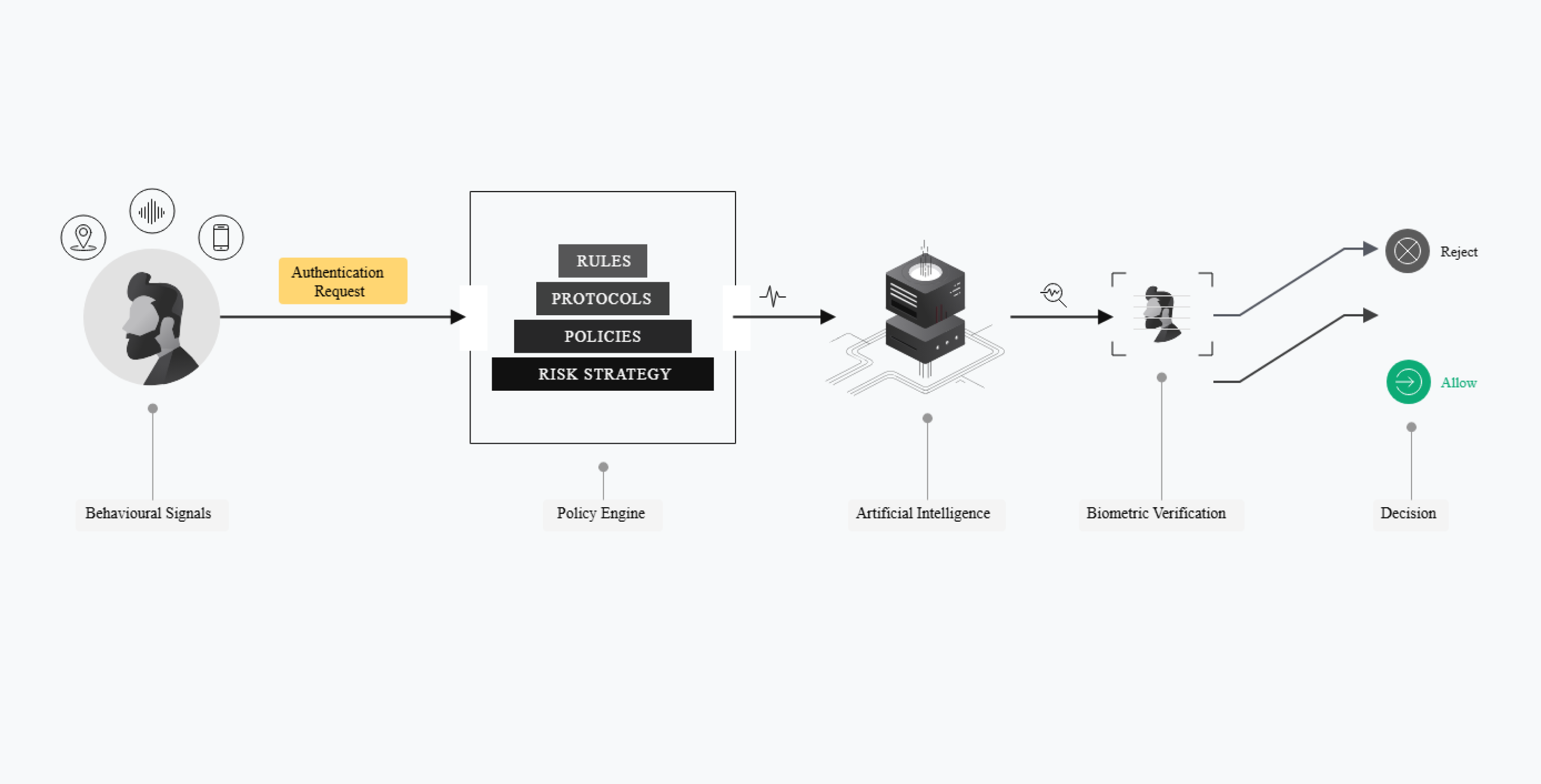
To ground the redesign in real-world needs, I conducted interviews, surveys, and competitor benchmarking with cybersecurity analysts and fraud specialists. The goal was to understand how users define, test, and manage authentication rules — and where existing tools created friction. From this research, I mapped the full authentication process, from behavioural signals and risk evaluation to AI-driven policy decisions and biometric verification. The key finding was clear: analysts were forced to think like developers when creating rules.
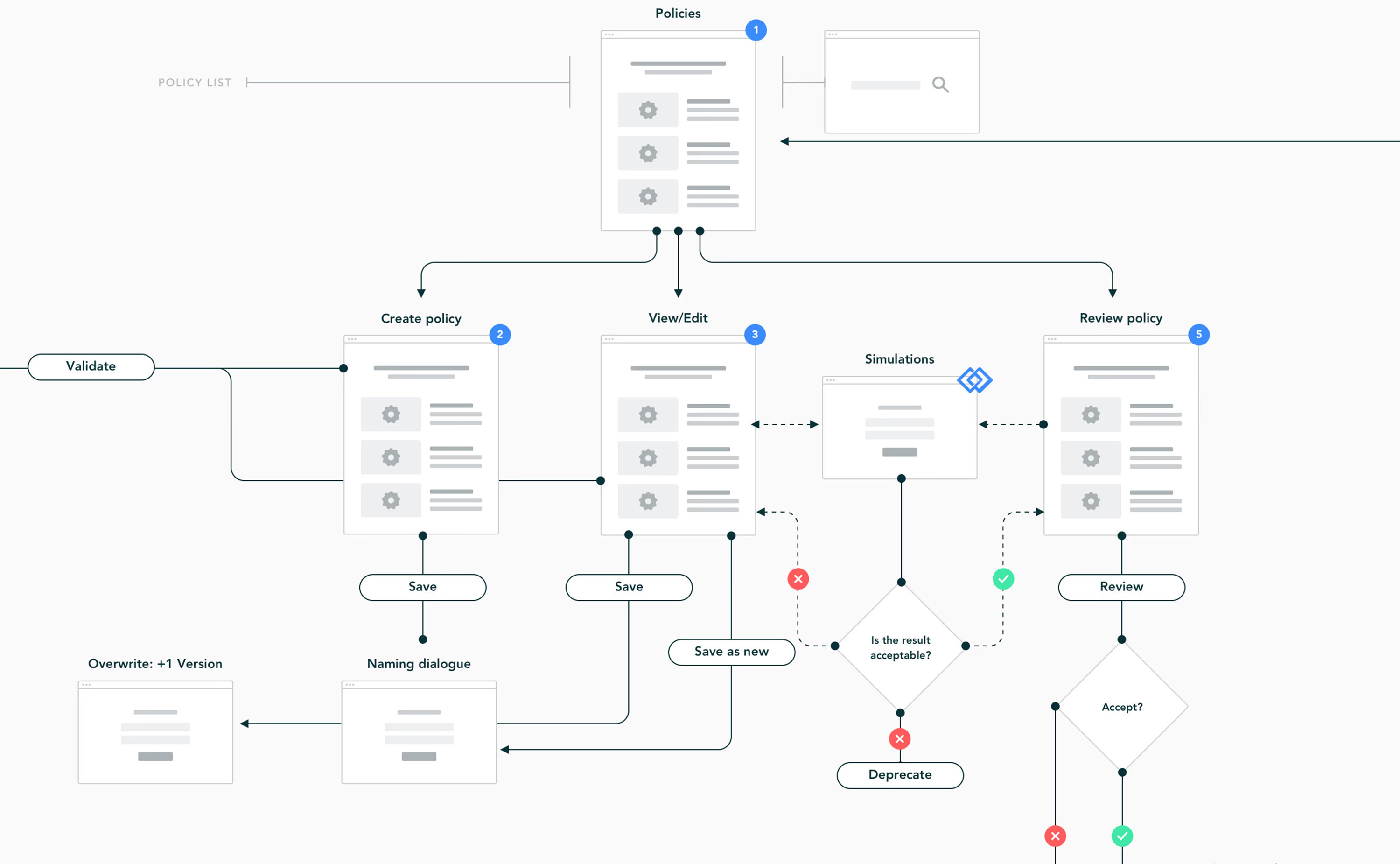
Wireframes & Design System
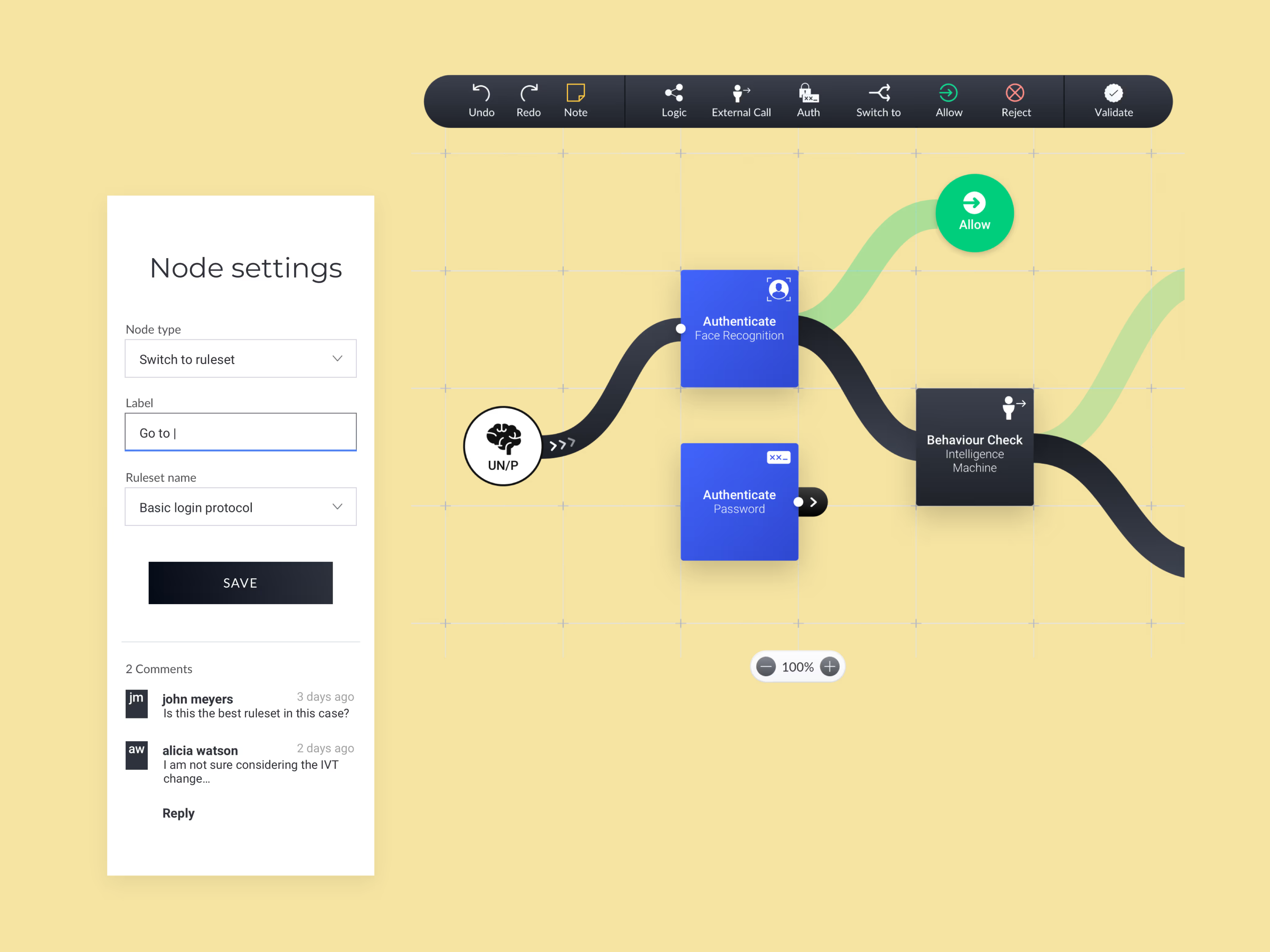
The ideation phase focused on reversing that model: transforming a technical, database-centric workflow into an intuitive, human-centred policy engine. I designed visual flows that let analysts build and validate rules without code, using clear decision pathways and modular, reusable components. This approach not only improved usability but also set the foundation for a scalable, reusable design system adopted across other Callsign modules.
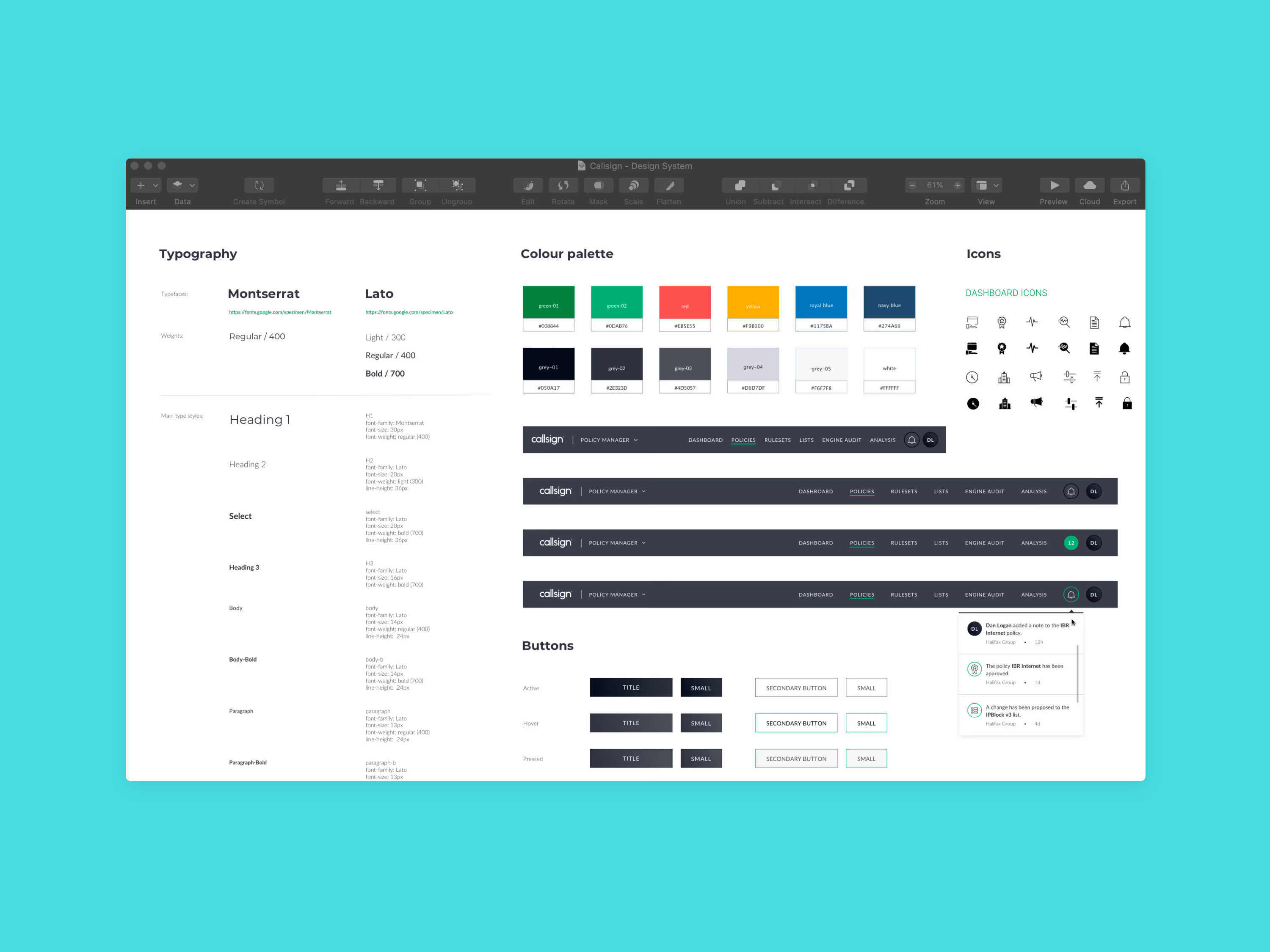
Within eight weeks, the project evolved from concept to a fully documented design system supporting Callsign’s policy engine and analytics suite. Each UI component was defined with clear interaction states, usage principles, and contextual examples to maintain consistency across all modules. The system gave developers a shared design language that reduced ambiguity, streamlined collaboration, and cut development time by about 30%, helping the team meet critical client demo deadlines. Beyond the immediate delivery, the design system was built for long-term scalability — meaning new product modules, features, and even future teams could extend it without reinventing patterns or visuals. This ensured faster iteration, reduced design debt, and provided a sustainable foundation for Callsign’s expanding suite of identity and fraud-prevention products.
High-Fidelity Prototypes
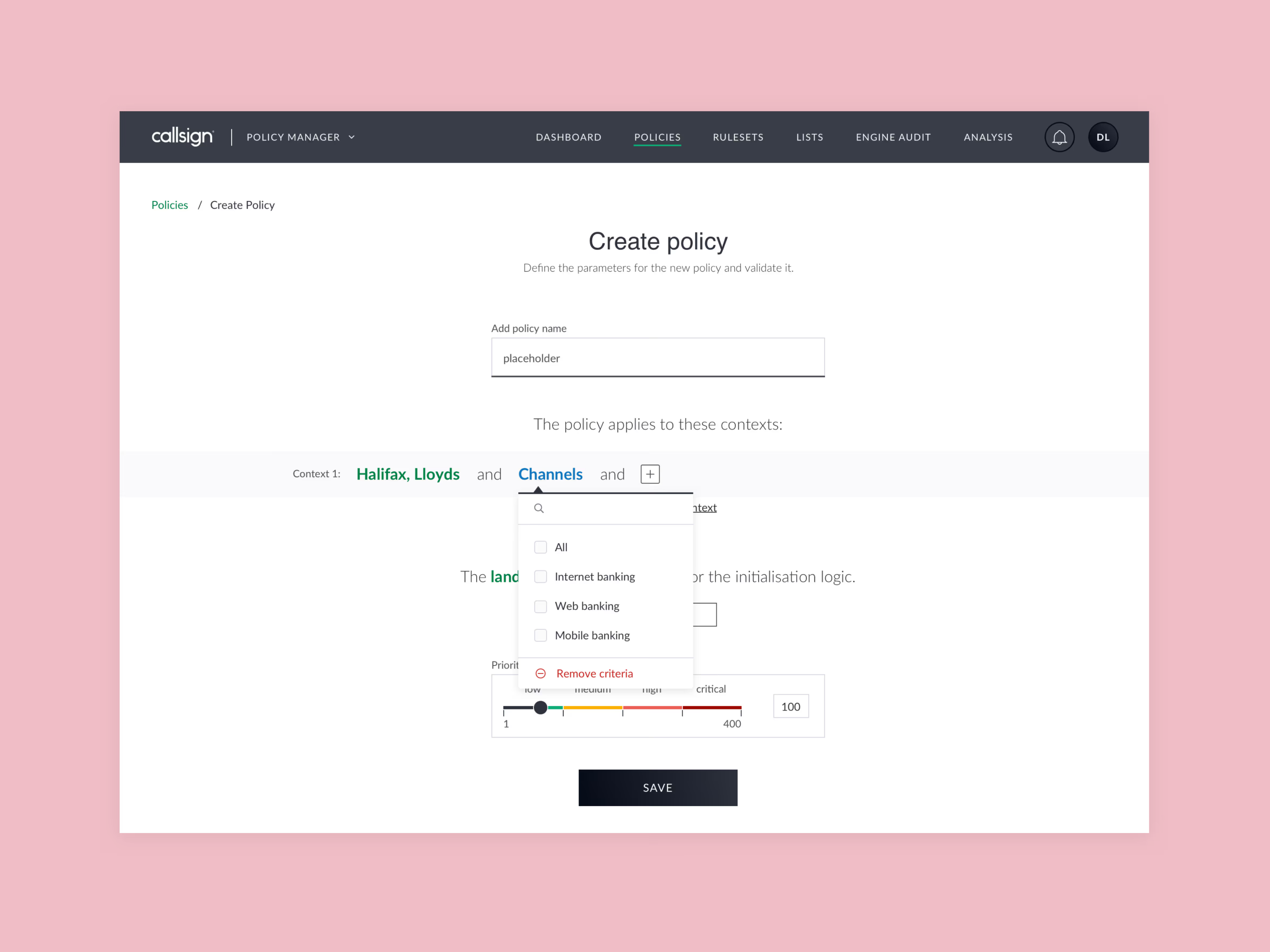
The redesigned Create Policy interface allows analysts to build complex authentication rules through a clean, guided flow. Each element — from defining contexts like banking channels to setting policy priorities was structured to minimise cognitive load and reduce dependency on technical teams. The new layout replaces dense form-based inputs with modular dropdowns, inline logic, and real-time feedback. Analysts can now quickly configure policies across multiple contexts (e.g., internet, web, or mobile banking) and instantly preview their impact.
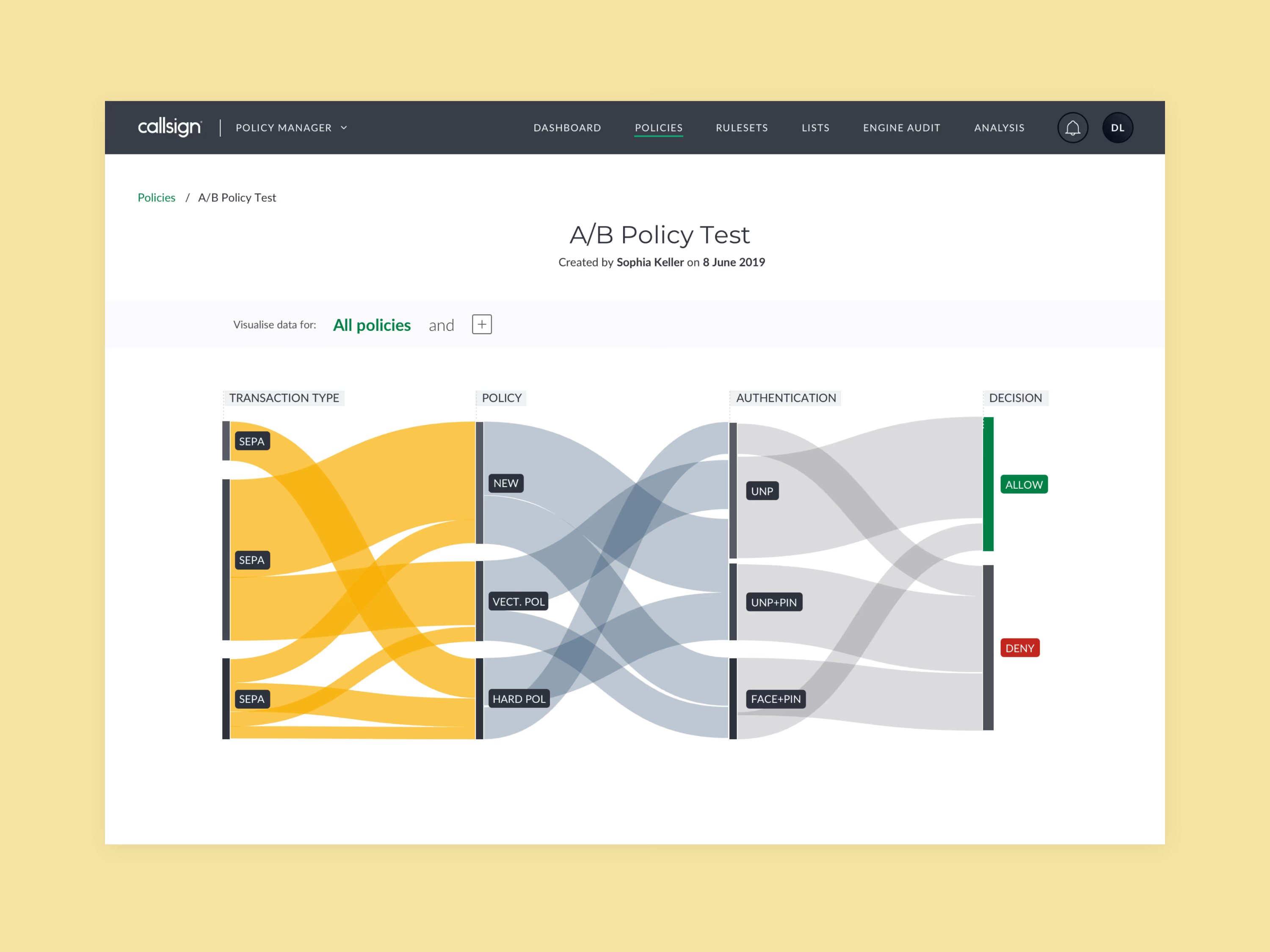
The redesigned policy tools brought clarity to both rule creation and performance analysis. The Create Policy interface allows analysts to define authentication logic through a guided visual flow, simplifying complex decision trees into an intuitive drag-and-drop experience. Each rule, channel, and priority can be adjusted in real time, giving users full transparency and control without requiring technical knowledge.
Complementing this, the A/B Policy Test dashboard lets analysts visualise how different rule sets perform across transaction types and authentication methods. By mapping policies to their outcomes, it reveals patterns in approval and rejection rates and supports faster, data-driven refinement of risk strategies. Together, these tools combine simplicity with analytical depth — helping teams design, test, and optimise authentication workflows with confidence and precision.
User Testing & Lessons Learned
Usability testing with fraud analysts and risk teams revealed how much users valued clarity and control when creating authentication rules. Early prototypes were simplified to show logic more transparently and reduce the number of steps needed to validate a policy. We also found that showing technical details only when needed kept the interface clean without losing depth. These lessons reinforced that good design in cybersecurity is about balance — giving users confidence and efficiency without adding complexity.
%201%20(1).png)